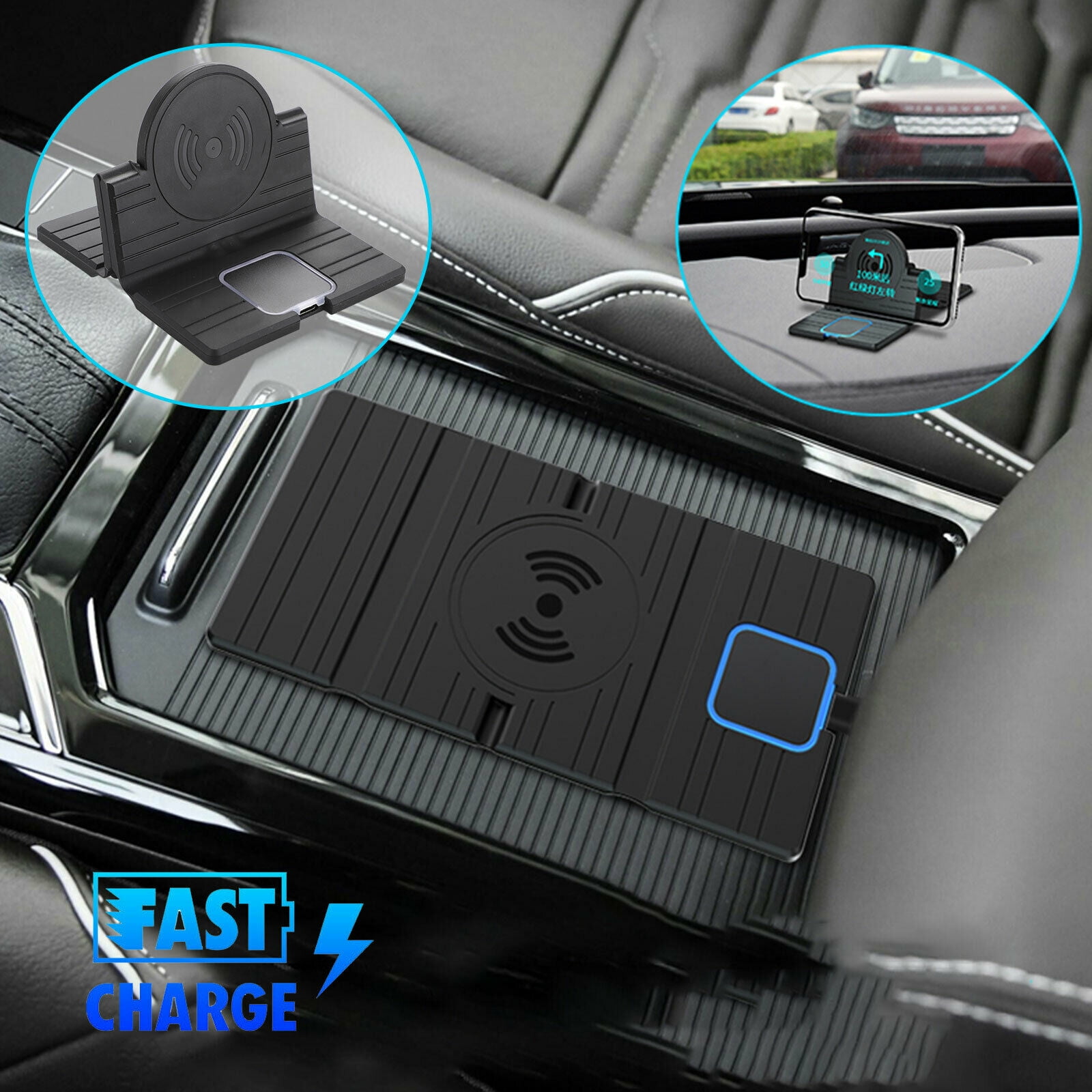
You’ve been there. You’re down to 4% battery, you’ve got a forty-minute commute ahead of you, and you plug your phone into that little plastic nub in the dashboard. You expect a surge. You expect that lightning bolt icon to mean business. But forty minutes later, you’ve only crawled up to 12%. It’s frustrating. Honestly, it's a scam.
The problem is that "fast" has become a marketing buzzword that doesn't actually mean anything without the right hardware backing it up. Most people think a car phone charger fast enough to juice up a modern iPhone or Galaxy is just a matter of buying anything with a USB-C port. That’s wrong. There is a massive disconnect between the port on your phone, the cable in your hand, and the actual power profile of the adapter plugged into your 12V socket.
The Volts and Amps Nobody Tells You About
Charging isn't just "on" or "off." It’s a handshake. When you plug your phone in, it talks to the charger. They negotiate. If the charger is a cheap $5 gas station special, it’s basically whispering. If it’s a high-end Power Delivery (PD) unit, it’s shouting.
To get a car phone charger fast enough to actually make a difference, you need to understand Power Delivery and Programmable Power Supply (PPS). Most modern flagships, like the Samsung S24 or the iPhone 15/16 series, use these protocols to "request" specific voltages. If your car charger doesn't speak that specific language, it defaults to a slow, "safe" speed. Usually 5 watts. That is a trickle. You want a flood.
Why 12 Watts Isn't Enough Anymore
Ten years ago, a 2.4A USB-A port was the gold standard. It felt fast. But today’s batteries are massive. They are dense. Trying to charge a modern Pro Max or Ultra phone with a 12W charger is like trying to fill a swimming pool with a garden hose while someone is simultaneously bailing water out—because remember, if you’re using GPS and Spotify, you’re draining power while you charge.
You need overhead. A charger rated for 30W is the bare minimum for modern efficiency, but if you really want to see that percentage climb while you drive, you should be looking at 45W or even 65W units.
The USB-A vs. USB-C Reality Check
Stop using USB-A. Just stop. Those rectangular ports are relics. They physically cannot support the higher wattages required for true fast charging. To get a car phone charger fast enough to meet 2026 standards, you must use a USB-C to USB-C (or USB-C to Lightning for older iPhones) setup.
USB-C allows for a protocol called "Power Delivery." This is what allows a charger to jump from 5V to 9V, 12V, or even 20V. It’s the difference between a 30-minute charge to 50% and a three-hour wait.
Heat Is the Silent Battery Killer
Here is something the manufacturers don't put on the box: heat stops fast charging. If your phone is sitting on a magnetic mount in the direct sun while it's plugged in, the internal thermal sensors will throttle the charging speed. Your "fast charger" will suddenly become a slow charger to prevent the battery from exploding.
Kinda sucks, right?
If you want the best results, keep the phone out of the sun. Some high-end chargers from brands like Satechi or Anker now include tiny fans or advanced gallium nitride (GaN) components to keep the adapter itself cool, which helps maintain a steady current. GaN is a game-changer. It’s a crystal-like material that conducts electrons way more efficiently than silicon. This means chargers can be smaller and stay cooler while pushing more power.
What to Look for in a Real Fast Car Charger
Don't just look at the total wattage. This is a classic trap. A charger might boast "60W Total Power!" but it has three ports. Often, that 60W is split 20/20/20. If you plug three things in, none of them are actually fast charging.
You want to see the "Single Port Output" rating.
- PPS Support: If you use a Samsung or a Google Pixel, this is non-negotiable. PPS allows the charger to adjust voltage in tiny increments, reducing heat and maximizing speed.
- Solid Tension Springs: Cheap chargers pop out of the cigarette lighter socket when you hit a pothole. You want something that feels "tight" when you plug it in.
- Certification: Look for USB-IF certification. It means the device actually follows the safety standards it claims to.
The Cable Matters Just as Much
You can buy the most expensive car phone charger fast enough to power a laptop, but if you’re using a frayed cable you found in a drawer, it won't work. Cables have "e-marker" chips. These chips tell the phone and the charger how much current the wire can safely handle. If the cable is cheap, the system will cap the speed at a lower level to prevent the wire from melting.
Seriously. Don't cheap out on the string.
Real-World Testing: What Works?
In tests conducted by various tech outlets, chargers like the Anker 736 or the Baseus 65W Digital Display have shown that they can actually hit the advertised speeds. The Baseus is particularly cool because it has a tiny LED screen that shows you exactly how many volts and amps are flowing into your phone. It’s nerd-heaven, but it also proves you’re getting what you paid for.
Most people don't realize their car's built-in USB port is usually the worst way to charge. Car manufacturers are notoriously slow at updating tech. Even in many 2023 and 2024 models, the "built-in" USB-C ports are often capped at 15W. That’s barely enough to maintain your battery while using CarPlay. A dedicated 12V adapter is almost always faster.
Actionable Steps for Better Charging
If you're tired of slow charging, do these three things immediately:
- Check your phone's max input: Look up your specific model. There is no point in buying a 100W car charger if your phone maxes out at 27W (like most iPhones). Match the charger to the phone’s peak capability.
- Ditch the "Integrated" car ports: Buy a high-quality GaN-based adapter for your 12V (cigarette lighter) socket. It bypasses the car's weak internal power distribution.
- Invest in a 100W rated cable: Even if your phone doesn't need 100W, a cable rated for it has thicker copper and better shielding, which reduces resistance and heat.
- Clear the lint: This sounds stupid, but it’s real. If your "fast" charger feels loose or only works at certain angles, take a toothpick and clean the pocket lint out of your phone's charging port. If the connection isn't perfect, the "handshake" fails, and you get slow speeds.
The tech moves fast. A charger from three years ago is basically a paperweight for a 2026 flagship. If you want to arrive at your destination with a full battery, you have to play the hardware game. Get a GaN-powered PD 3.0 or 3.1 adapter, pair it with a certified 5A cable, and keep your phone out of the dashboard sun. That is how you actually get your car phone charger fast.