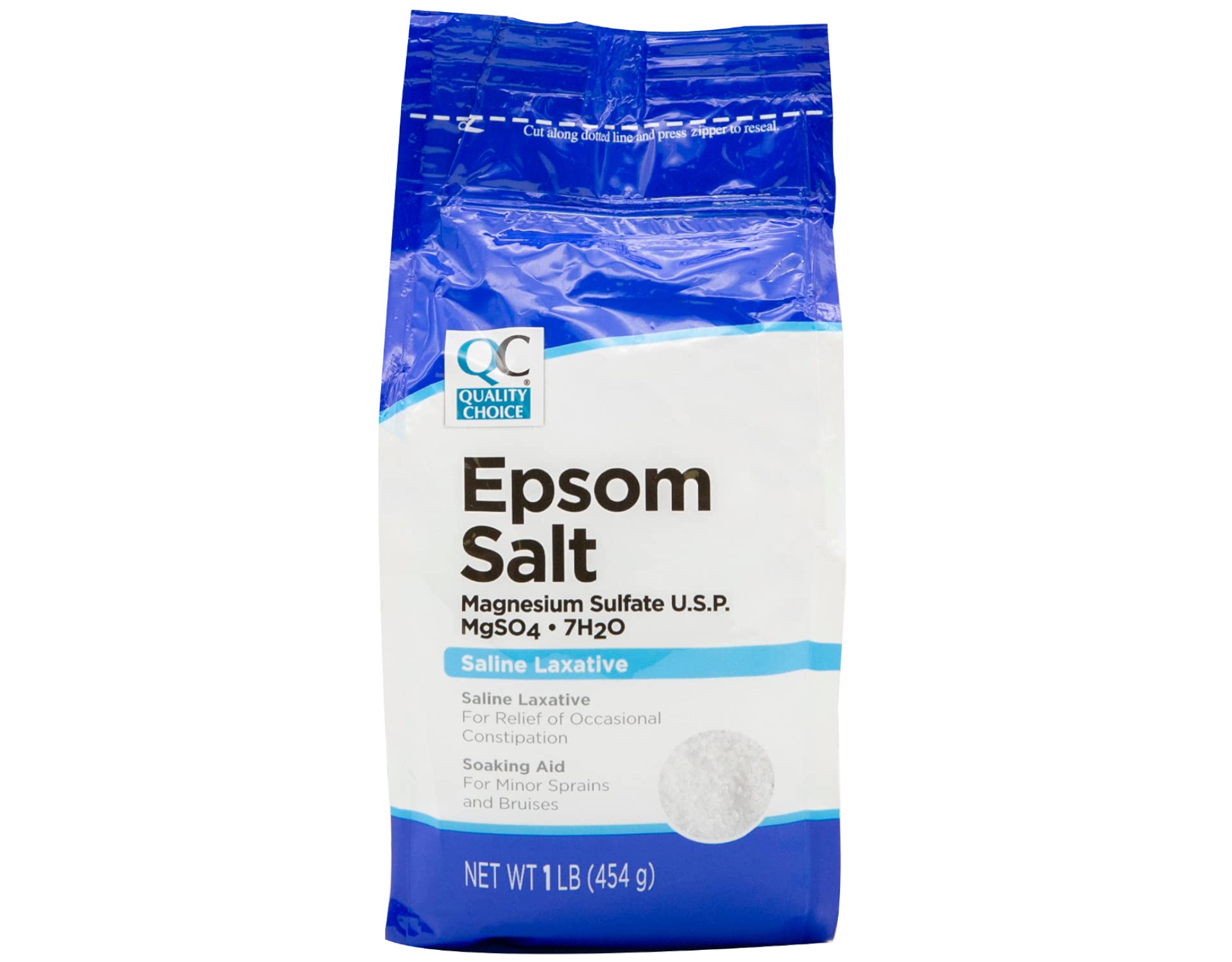
You’ve probably seen those big, milk-carton-looking bags of Epsom salt sitting on the bottom shelf of the pharmacy, right next to the fancy lavender bath bombs. Most people grab them for a post-workout soak to soothe sore muscles, which is great. But look closer at the back of the bag. You'll see a section labeled "Drug Facts." That’s because epsom salt saline laxative is one of the oldest, cheapest, and most effective ways to get things moving when your digestive system decides to go on strike.
It’s magnesium sulfate. That's the scientific name.
It isn't some complex, lab-engineered synthetic drug. It’s a mineral. Honestly, it’s kinda fascinating how something so simple can have such a drastic effect on the human gut. But here’s the thing: it’s powerful. Really powerful. If you treat it like a casual supplement, you might end up spending your entire Saturday three feet from a toilet. You have to respect the chemistry.
How Epsom Salt Saline Laxative Actually Works
Let’s get into the mechanics. Most people think a laxative just "pushes" things through, like a physical shove. That’s not what’s happening here. Magnesium sulfate is what doctors call an osmotic laxative.
Think of it like a sponge in reverse. When you drink a solution of epsom salt saline laxative, the magnesium doesn't get fully absorbed into your bloodstream. Instead, it stays in your intestines. Because nature hates an imbalance, the salt pulls water out of your surrounding tissues and into the colon through a process called osmosis.
This does two things. First, it softens the stool. Hard, dry waste is the primary culprit in constipation. Second, all that extra water creates pressure. That pressure stretches the walls of your intestines, which sends a frantic signal to your brain saying, "Hey, it’s time to go. Right now."
It’s fast. Usually, you’re looking at a window of thirty minutes to six hours. If you take it at 10:00 PM thinking you’ll be fine until morning, you’re probably going to have a very rude awakening at 2:00 AM.
Why the "Saline" Part Matters
The term "saline laxative" just means it’s a salt-based solution. Other options like MiraLAX use polyethylene glycol, which is a different beast entirely. Epsom salt is more aggressive. It’s a "rescue" remedy, not a daily habit. If you find yourself reaching for the bag every week, you've got a bigger issue that a bag of salt isn't going to fix.
The Right Way to Dose (Don’t Wing It)
You cannot just pour a handful of salt into a glass and hope for the best. Precision matters here because magnesium toxicity is a real, albeit rare, thing.
For adults and children 12 years and older, the standard dose is usually 2 to 6 level teaspoons per day. But don't just take my word for it—read the specific bag you bought. Different brands might have slightly different crystal sizes. You have to dissolve it completely in at least 8 ounces of water.
It tastes terrible.
I’m being serious. It’s bitter, metallic, and generally unpleasant. A lot of people find that mixing it with a bit of lemon juice or chilling the water helps mask that "licking a battery" flavor. Some even chase it with a glass of orange juice. Whatever you do, make sure you drink plenty of extra water afterward. Since the laxative works by pulling water out of your body, you can get dehydrated remarkably fast.
The Kids’ Table
For children ages 6 to 11, the dose is much smaller, typically 1 to 2 teaspoons. But honestly? Talk to a pediatrician first. Kids' electrolyte balances are way more sensitive than ours. Under age 6? Just don't. There are better, gentler options for toddlers that won't risk upsetting their mineral levels.
Real Talk: The Risks Nobody Mentions
Epsom salt isn't for everyone. This is where people get into trouble. Because it's "natural," there's a misconception that it's 100% safe for everyone, all the time.
If you have kidney disease, stay away from epsom salt saline laxative. Your kidneys are responsible for filtering out excess magnesium. If they aren't firing on all cylinders, that magnesium builds up in your blood. This can lead to something called hypermagnesemia. It’s scary. Symptoms include low blood pressure, confusion, and in extreme cases, cardiac arrest.
Also, if you're on a sodium-restricted diet, be careful. While it's magnesium sulfate and not sodium chloride (table salt), it still affects how your body handles fluids and minerals.
- Heart issues: Sudden shifts in electrolytes can trigger arrhythmias.
- Stomach pain: If you have severe abdominal pain, nausea, or vomiting, don't take a laxative. You might have an obstruction or appendicitis. Adding pressure to a blocked pipe is a recipe for disaster.
- Pregnancy: Always ask your OB-GYN. Everything you ingest affects the baby, and the cramping caused by osmotic laxatives isn't always ideal during pregnancy.
Why Some Experts Prefer Other Methods
I spoke with a few nutritionists who pointed out that while Epsom salt works, it’s a bit of a "sledgehammer" approach. Dr. Marvin Singh, a prominent gastroenterologist, often emphasizes that we should look at root causes like fiber intake and hydration first.
Epsom salt is a temporary fix. It’s for that "I haven't gone in three days and I’m miserable" moment. It’s not a cure for chronic constipation. If you rely on it, your bowels can actually become "lazy." They start waiting for the osmotic pull to do the work instead of using their own muscles (peristalsis) to move things along.
Compare it to bulk-forming laxatives like psyllium husk (Metamucil). Those take 12 to 72 hours to work. They’re slow. They’re gentle. Epsom salt is the "emergency exit" by comparison.
Common Mistakes That Ruin the Experience
The biggest mistake? Not drinking enough water. I can't stress this enough. If you take the salt and don't hydrate, the salt will pull water from your brain and organs. You'll end up with a massive headache and still be constipated.
Another one: taking it too close to other medications. Magnesium is a "binder." It loves to grab onto other drugs—like antibiotics or blood pressure meds—and prevent them from being absorbed. Give it a two-hour window. Take your meds, wait two hours, then do the Epsom salt. Or vice-versa.
And please, stay home. This isn't the supplement you take before heading to a movie or a long commute. When it works, it works with urgency.
What to Look for When Buying
Not all Epsom salt is created equal. You’ll see bags in the gardening section and bags in the health section.
Do not eat gardening salt. The stuff meant for your tomatoes might contain heavy metals or impurities that are fine for soil but toxic for humans. Look for the "USP" mark on the label. That stands for United States Pharmacopeia. It means the product has been tested for purity and is safe for human consumption as a epsom salt saline laxative.
If the bag only mentions "soaking" or "external use," leave it on the shelf. You want the one that specifically lists internal dosing instructions.
Actionable Steps for Safe Use
If you’ve decided that this is the right move for your current situation, follow this protocol to keep things safe and effective:
1. Check the USP Label
Verify the bag is food-grade and contains only magnesium sulfate. If it has scents like eucalyptus or peppermint, it's for the bathtub only.
2. Time it Wisely
Clear your schedule for at least six hours. Make sure you have easy, private access to a bathroom.
3. The Mix
Dissolve the recommended dose (start on the lower end, maybe 2 teaspoons) in 8 ounces of water. Stir until the water is clear. No crunchy bits.
4. The Water Follow-up
Drink a second 8-ounce glass of plain water immediately after the saline mix. Continue sipping water throughout the day.
5. Monitor Your Body
Expect some cramping. That’s the osmosis happening. However, if you feel dizzy, develop a rash, or have no bowel movement after six hours, stop and call a doctor. It might mean you have a more serious blockage that requires medical intervention.
6. Evaluate the "Why"
Once the immediate problem is solved, look at your diet. Are you getting 25-30 grams of fiber? Are you drinking enough water daily? Most constipation is a lifestyle signal, not a salt deficiency.
Epsom salt is a tool. It's an old-fashioned, reliable, and incredibly cheap tool. Use it sparingly, use it correctly, and it'll do exactly what it's supposed to do without causing unnecessary drama in your life.